.avif)

DEEP’s mission to Make Humans Aquatic has created an opportunity to receive training in the operation of closed bell systems at our state-of-the-art, purpose-built facility.
This article contains information for experienced commercial divers who are thinking about making the transition to closed bell diving for the next stage in their diving career.
Read on to learn about what it takes to work in a saturation environment and deploy using a closed bell diving system.
How closed bell saturation diving works
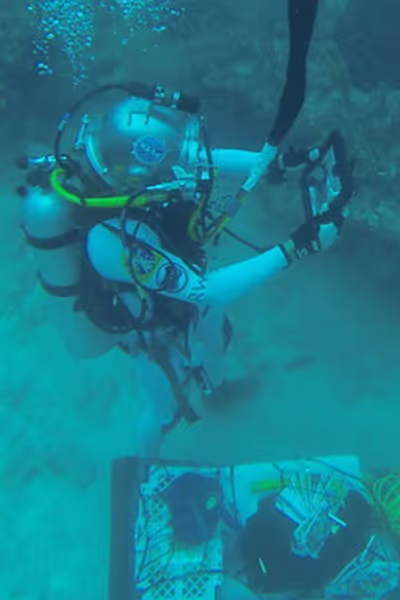
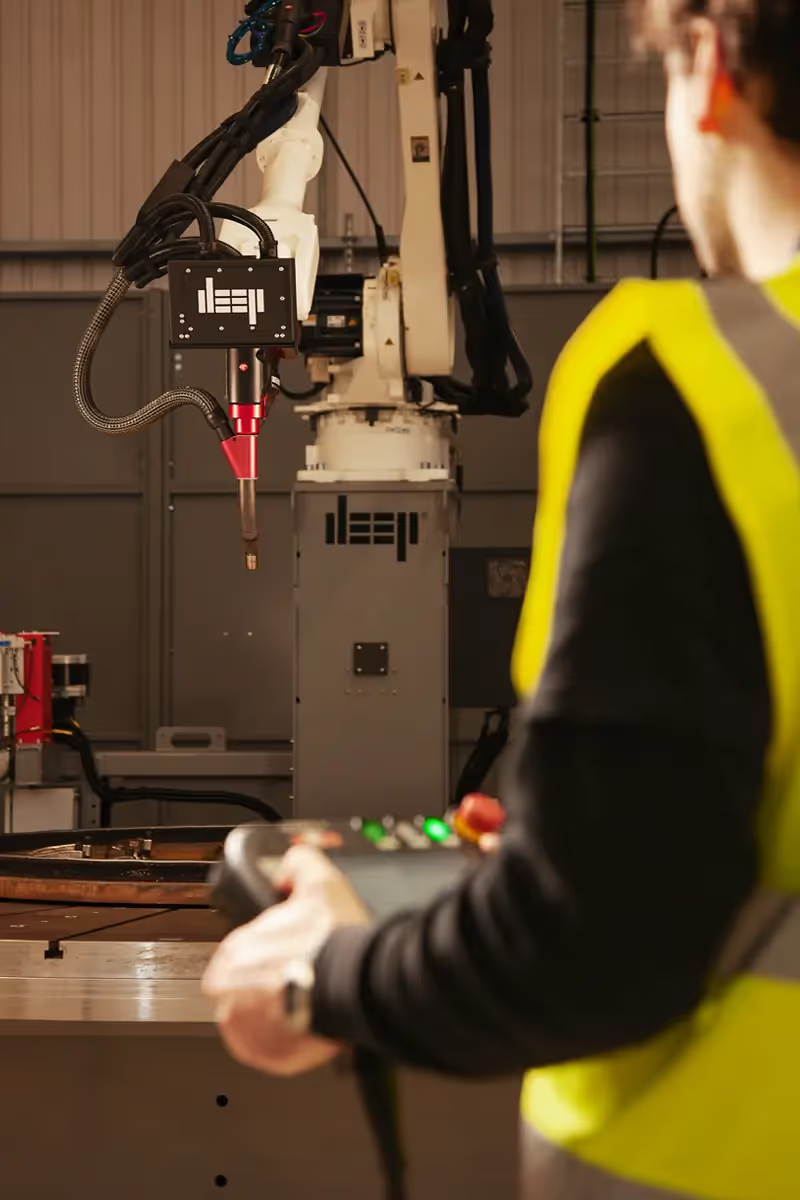
As with all commercial diving, the aim of closed bell diving is to deploy to water and get a job done. Typical jobs a closed bell diver does involve inspection, repair, and maintenance of underwater infrastructure. Some divers will also specialize as a welder.
As a closed bell diver, you operate in deeper water than surface-supplied commercial divers, at depths between 50 meters and 300 meters.
When not diving, you live in a pressurized chamber on the surface. This removes the need for decompression time between shifts and gives you longer dive times per shift.
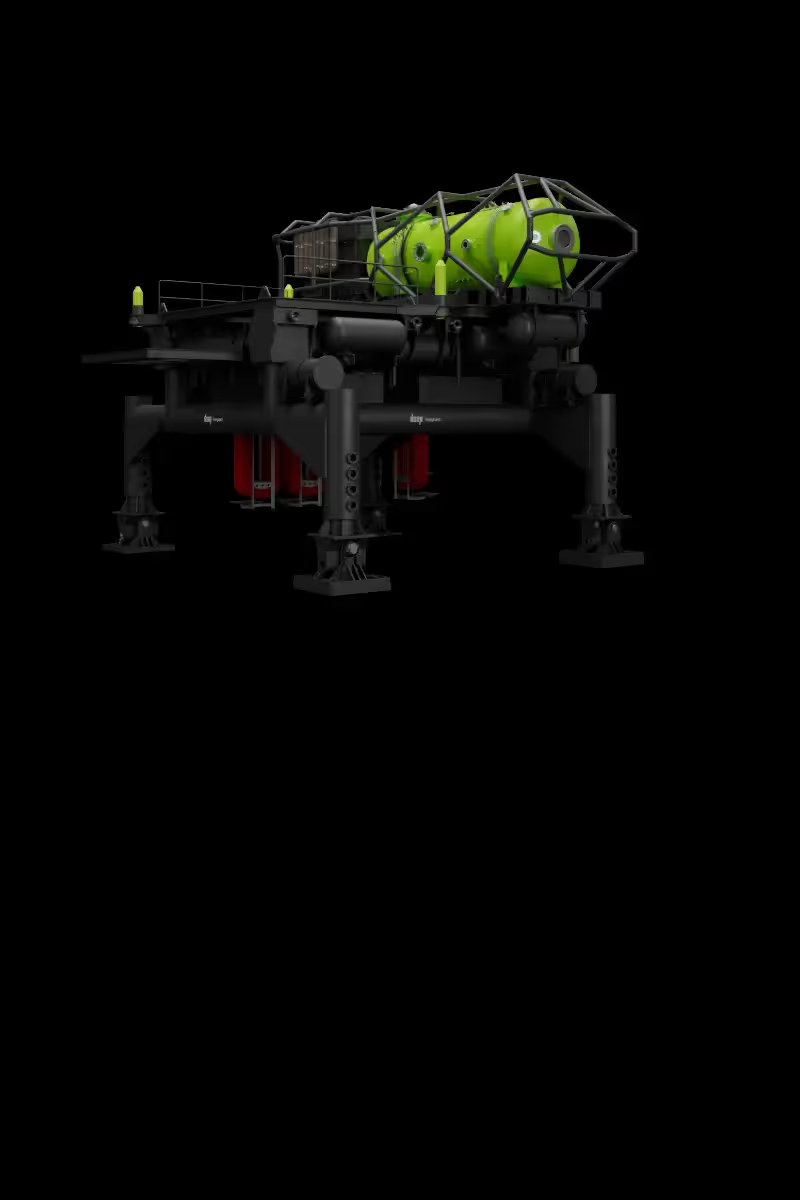
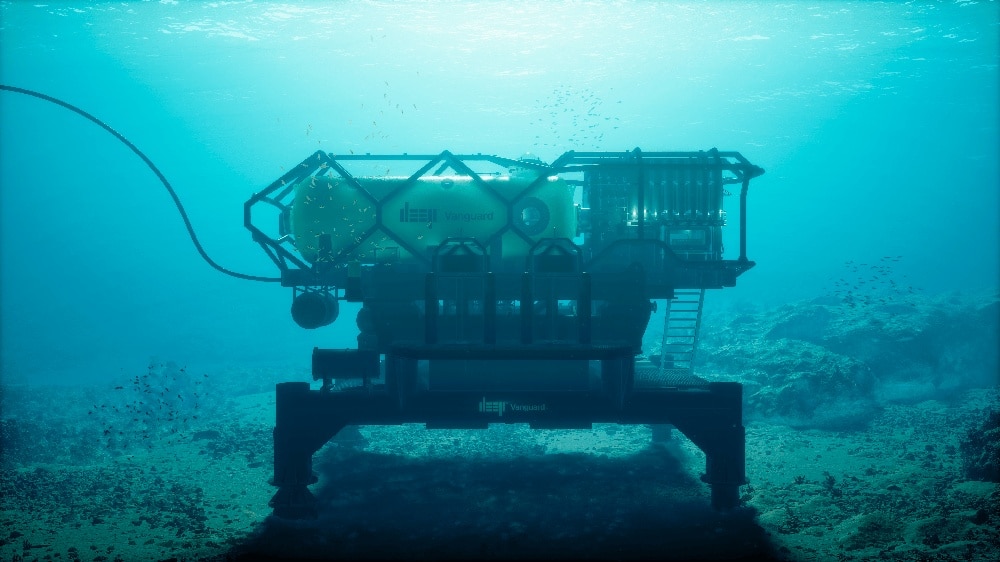
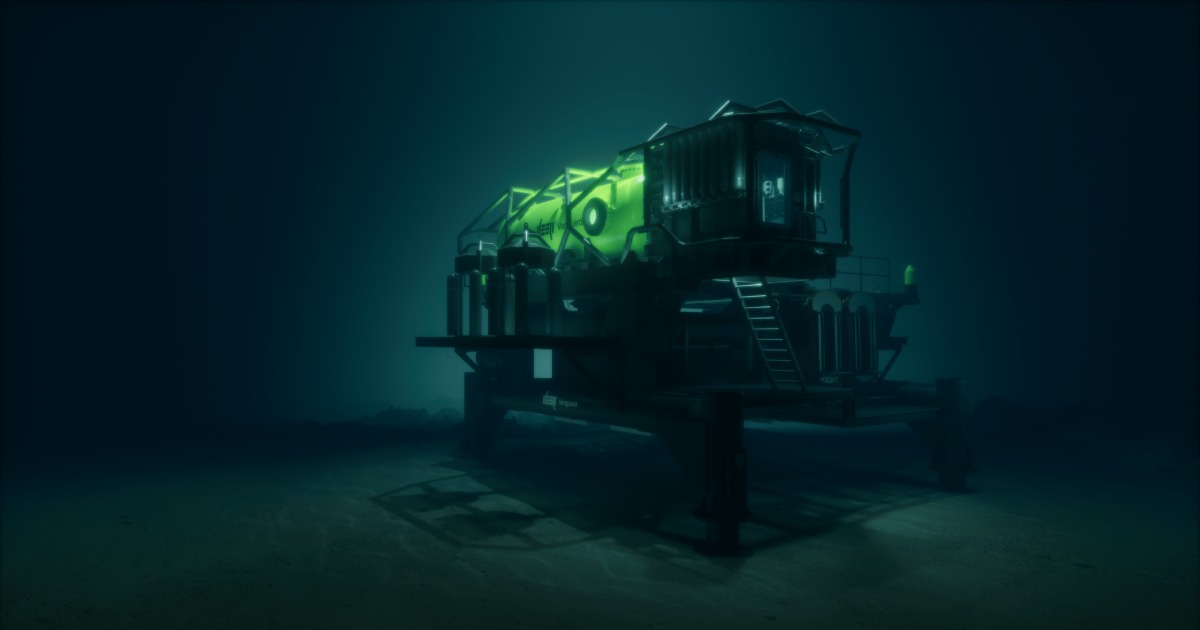
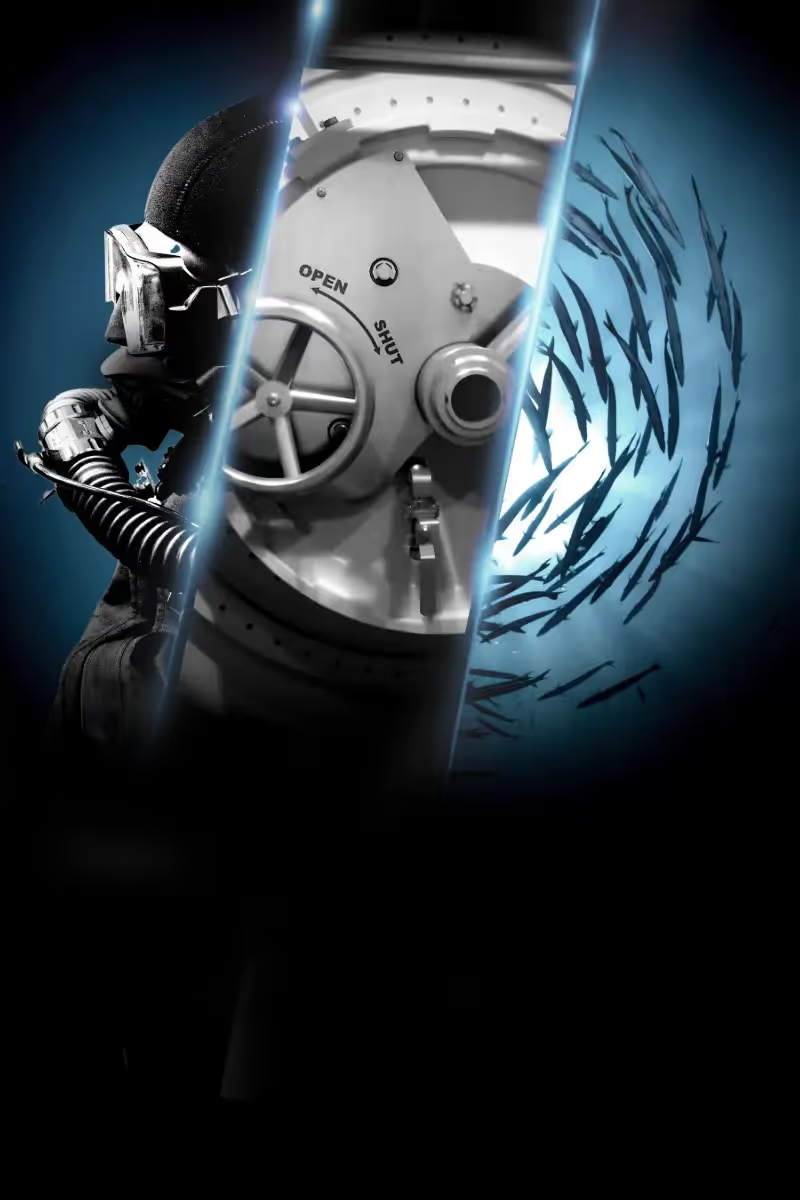
The closed bell system is used to transport divers from the chamber to their work underwater. Like the living chamber, the bell is pressurized to match the ambient pressure at the working depth. In this way, divers stay in a state of saturation, with the maintenance of pressure preventing the release of gases the body has absorbed.
What closed bell diving is really like offshore
The reality of working offshore as a diver does not always meet the expectations of adventure that some people imagine.
Here’s how it typically works in a nutshell. You join a vessel and spend a day getting briefed and having your medical. Then you enter the chamber and get into a 12-hour shift rotation pattern that continues for 28 days. After that time, you decompress and come out of the chamber, having dived for six to eight hours every day. You need to be comfortable with working rotational shift patterns and spending extended periods away from home.
Where closed bell diving sits in commercial diving career progression
By the time you’re eligible for closed bell training, the industry expects you to be comfortable in the water. The step-change is learning to live at pressure, and the operational and psychological realities of saturation.
A commercial diver who wants to move from surface supplied to closed bell will first need to be established in the industry, with at least three or four years ‘in the hat’.
Closed bell diving is highly specialist. Entry level criteria include:
- Being able to demonstrate you have dived and worked underwater competently and safely for an extended period.
- Attaining enough experience to ensure you have the competence required to operate closed bell systems safely and effectively.
Why experienced commercial divers move into closed bell operations
A closed bell qualification is a foundation for a career as a saturation diver. It increases the range of subsea projects you are eligible to work on, including some high-ticket projects that offer longer-term contracts.
Pay is a big factor. A closed bell diver can potentially earn two or three times as much per day as when they were working at shallower depths.
Becoming a closed bell diver expands your career opportunities. You get:
- Access to offshore vessel-based campaigns.
- Broader project eligibility, including oil and gas, renewables, and undersea construction.
- The potential to take on increased responsibility within dive teams.
- A structured pathway towards saturation progression.
There is also a natural progression for divers to want to go deeper. Closed bell diving is a way to achieve that.
Closed bell training can also be a pathway into adjacent roles in life support, training, supervision, or working as a technician.
“You can have a long-term career as a commercial diver, but moving into saturation feels like reaching the top.
I started as an apprentice dive technician and worked my way into commercial diving. Saturation is the next step for me.
There’s a shortage emerging in the industry, because the average age of saturation divers keeps rising. Now is the time for me to build a long-term saturation career.
I’m excited to train on full offshore-spec equipment — it will be learning in a real-world system, not just in a training system.
Owain Hughes, DEEP HSE Closed Bell Diver trainee
Is becoming a closed bell diver the right next step in your career?
Closed bell diving can be an incredibly rewarding and well-compensated career path, but it’s important to understand the realities before taking the next step.
It should go without saying that it helps if you can get along with abroad range of people and aren’t easily irritated by other people’s foibles. Because you’re going to be living in very close quarters with your workmates. Weather-related delays and operational pauses can mean long periods being stuck together in a small chamber. If that’s a problem, the job probably isn’t for you.
One of the biggest challenges is knowing that – no matter what – you can’t just open the door and exit the chamber. You are days away from being able to leave. And that remains true regardless of whether you have external pressures like a family emergency. No amount of goodwill from anyone in charge can change the physics of the situation.
On a related note, another potential source of psychological strain is that you’re entirely reliant on yourself and your team. If anything goes wrong when you’re diving, your only haven is the saturation system. You must manage any problems yourselves.
Requirements to train to be a closed bell diver
Entry criteria to train as a closed bell diver are built around logged offshore commercial experience. Requirements may vary by course and geography, but by way of example, DEEP’s HSE Closed Bell Diver course requires you to:
- Hold a recognized commercial diver certification to 50 meters and have held that qualification for at least 12 months.
- Be highly experienced in surface supplied breathing apparatus (SSBA), recording significant bottom time since qualifying as an SSBA diver.
- Maintain a valid, in-date diving medical, and meet the fitness requirements for hyperbaric and offshore environments.
- Maintain a valid certificate of competence in first aid at work.
Common misconceptions about closed bell diving
Myth #1 – Diver salaries are uniform and predictable
As with other areas of commercial diving, the jobs you do and how well they pay will vary greatly depending on your experience, the location, demand for closed bell divers, and your own network of contacts. You may benefit from better pay from potentially longer-term contracts, but the uncertainties of self-employment remain.
Myth #2 – Closed bell is the final point of a commercial diver’s career path
Closed bell diving is certainly a logical next step for commercial divers who want to go deeper and potentially work on bigger projects. But that doesn’t make it the end of the line. A closed bell diving qualification cansupport progression into life support roles, working as a dive supervisor, client-facing roles, or training roles.
Myth #3 – Closed bell is only for oil and gas
While most closed bell diving roles have traditionally been in the oil and gas industry, there are opportunities in several other subsea sectors, such as:
- Marine salvage
- Construction and engineering
- Subsea cables
- Scientific research
- Offshore renewables
Myth #4 – Offshore jobs automatically follow from training
Once you have bell diving certification, your experience as a surface supply diver will continue to be as important as it ever was, as will the contacts you have made during your career. Progression is often network-led – divers build contacts project by project, and opportunities travel through teams and reputations as much as through job boards.
What you learn during closed bell diving training
DEEP’s closed bell diver training course teaches you how to live and operate in a saturation environment and deploy from that environment.
Training is heavily operational: bell procedures, chamber/bell transfers, emergencies. It gives a taste of chamber living.
You’ll learn:
- Bell launch and recovery systems.
- Lock-out and lock-in procedures.
- Emergency drills and contingency management.
- Bell life support systems and gas management.
- Chamber operations and hyperbaric safety protocols.
- Communications systems and team coordination.
- Redundancy systems and failure response.
The course lasts three weeks. For the first two weeks the days are split in two, with half the day spent on theory and the other half being the practical. In week three you do a saturation dive from the closed bell system and take the final examination.
Start your closed bell diving training
The HSE Closed Bell Diver qualification is the highest-level professional commercial diving certification that the UK’s Health and Safety Executive (HSE) issues for saturation and mixed-gas bell diving. It’s accepted and widely respected across the global commercial diving industry, and shows employers that you have received training from accredited instructors on real-world equipment.
You can review entry requirements and upcoming course dates on our closed bell diving course page.
.png)
.png)
.avif)
.avif)
.jpg)





.avif)
.avif)