.png)
.avif)
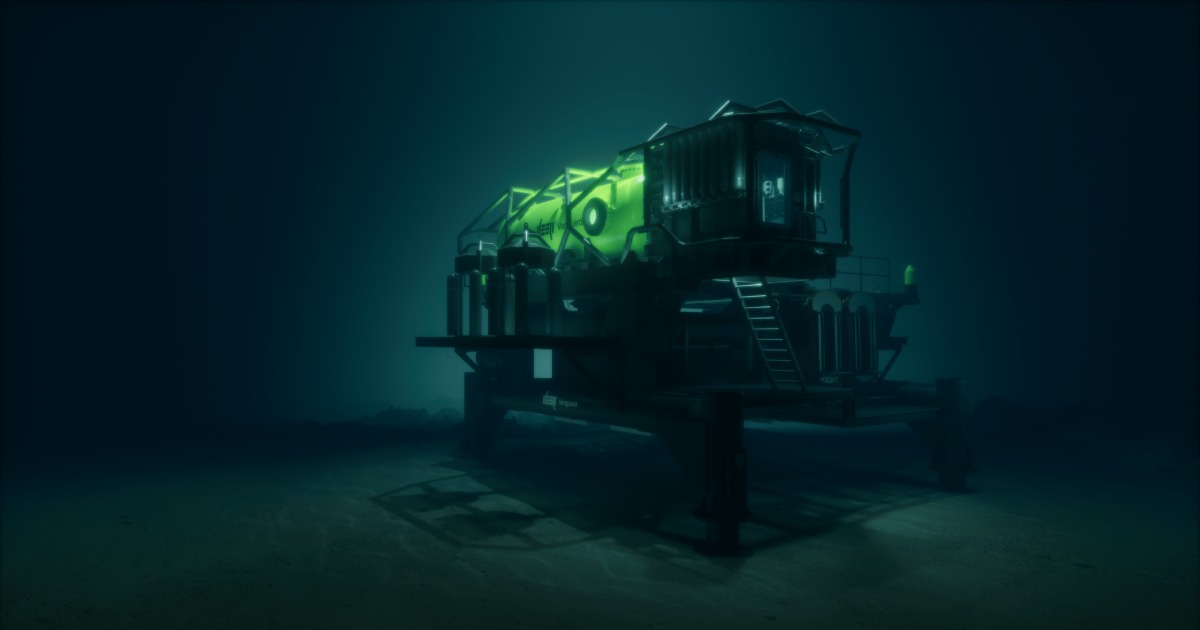
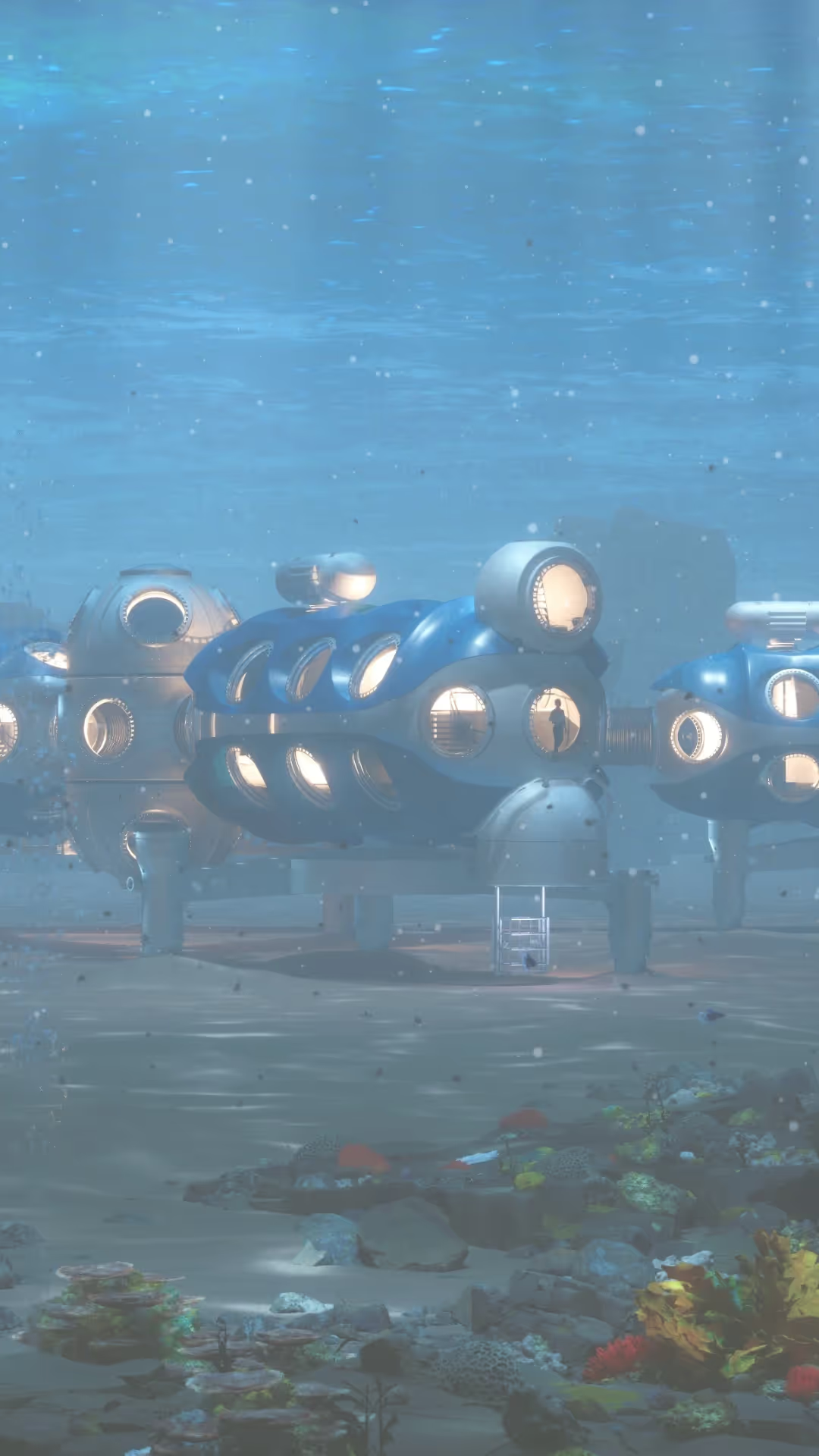
The lights are on inside Vanguard.
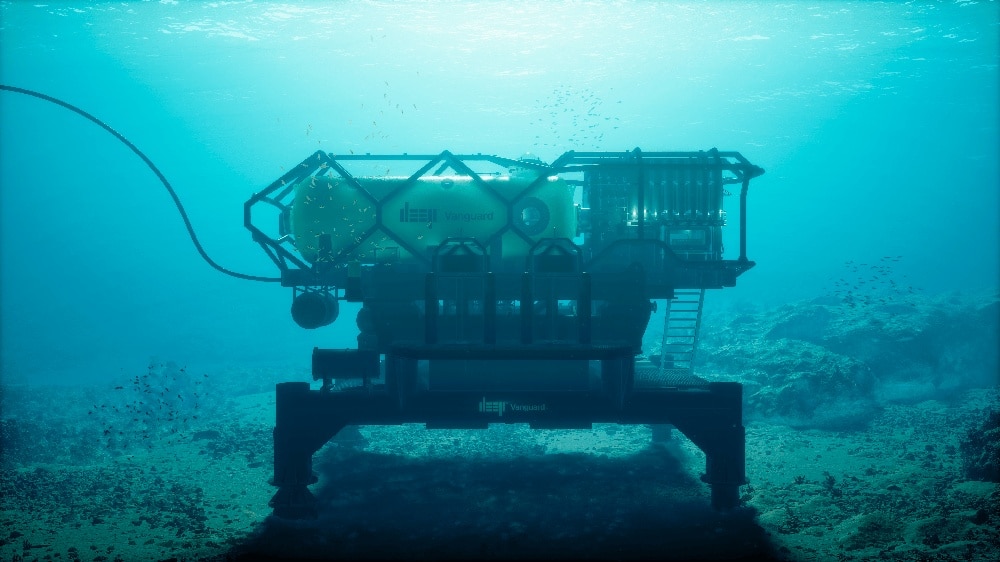
As I write, power is being generated in the support buoy and winding its way down the umbilical to our pilot subsea human habitat, where she rests 17 meters deep on the seabed at Tennessee Reef.
“Lights on” might not sound that significant, but I know the magnitude of the work and people involved that’s gone into making that real.
I can trace the lineage of a single light fixture back through from the technicians that installed it, the individuals that designed it, the conversations we had with DNV to class it, to standing in a wooden mock-up and asking, ‘should we put a light here?’
There are these small moments in the project that are an amazing part of the journey. To see power connected to Vanguard and the lights come on – that’s an underwater habitat, powered, and we built it. It’s incredible.
Where we are now
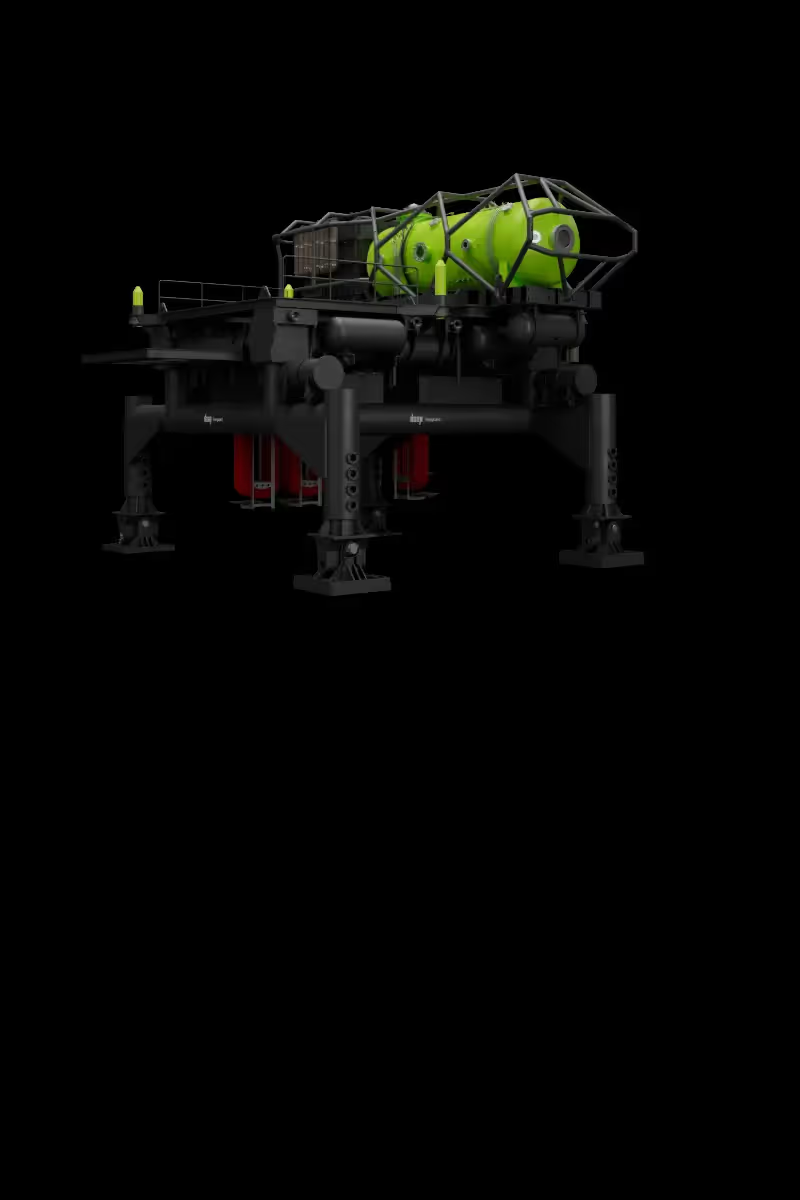
All the different parts of the Vanguard ecosystem are now installed at Tennessee Reef – the foundation, habitat, support buoy and mooring system.
It’s been quite the journey. Deployment is not a milestone, it’s a process. In this instance, it was a four-week process from start to finish to set the Vanguard habitat on the seabed at Tennessee Reef.
The first attempt to lower the habitat to the baseplate went flawlessly, but during diver inspections we noticed some connectors leaking air. Out of an abundance of caution, we chose to bring Vanguard back to the surface for a closer inspection. And we found a problem with some underwater connectors that didn’t show up in previous tests. We worked around the clock with a vendor to replace these connectors, worked closely with DNV through every step of the way, and then we had to wait a week for the weather to improve before we could lift the habitat again. Four weeks later, we set the Vanguard habitat back on the baseplate in a flawless lift operation, same as before.
As is the nature of first-of-a-kind (FOAK) systems engineering, we’ve discovered our fair share of ‘unknown unknowns’ along the way. By definition, you never see those coming. Thankfully, the discovery phase is behind us and we’ve flushed out most, if not all, of the ‘unknown unknowns’. Now, it’s a matter of troubleshooting and addressing minor issues, which is to be expected when commissioning any new system.
What’s next for Vanguard
We’re focused on operational readiness, testing, and progress toward DNV certification. What that looks like currently is a series of system shakedowns and operations team training in preparation for the sea acceptance test to be witnessed by DNV. This involves sequentially powering up and operating each system and troubleshooting any issues, ready to do it all again under third-party scrutiny.
Once we achieve the milestone of Vanguard being the first habitat to be classed under the DNV ruleset, the focus will shift to mission operations – initially our own demo missions, and then for clients, where there is already significant interest.
How Vanguard compares to other engineering projects
Compared to other major engineering projects I’ve led, the process of delivering Vanguard has been very similar, in a good way.
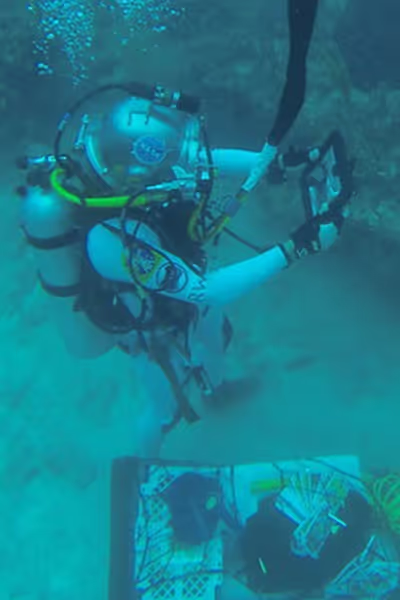
We’ve run through the same processes and rigor I’ve seen on many first-of-a-kind, critically important projects. These are the projects where mistakes are painful, if not dangerous to human life. From early design and deep analysis, through to third-party verification with DNV, it’s a process I’m very familiar with. Whether it’s hardware for NASA manned space flight missions or deepwater equipment for oil and gas infrastructure, it’s the same discipline in a different domain.
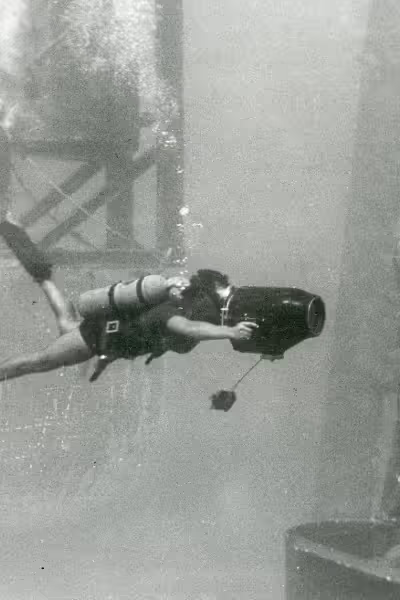
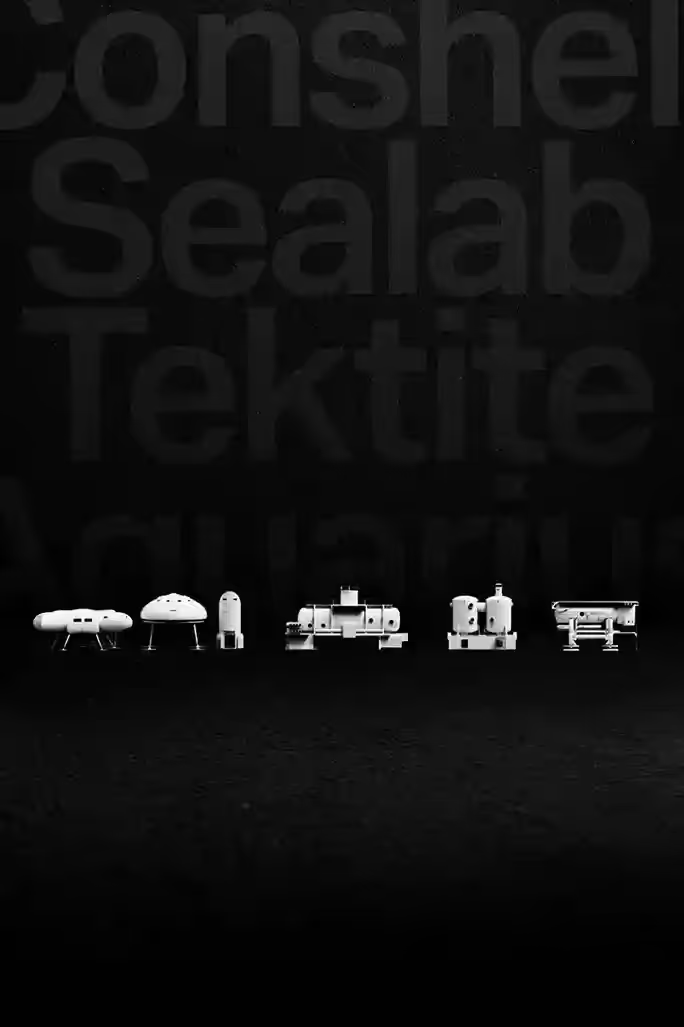
Where Vanguard differs is that this simply hasn’t been done in a long time. It’s been four decades since a habitat like this has been built. We’ve had to reinvigorate the thinking, rediscover the understanding, and develop new approaches, drawing on materials, technology, and tools available today. That’s been extraordinary to be a part of.
What I’ve learned from Vanguard
It’ll take time to fully unpack the lessons learned from engineering Vanguard. You need to step back from the project to understand them properly. Some of these lessons will only be fully learned by deploying the system in the water, which we’ve now done, and then operating the system for six months or more. Call it a stress test.
Two fundamental things remain true for any engineering project. You need the right people, and you need to be rigorous in all things – design, analysis, build and test.
We drew expertise from different industry partners and made adjustments along the way. The success of this project is due in part to our absolute conviction in holding this group of gifted people together, for this long, to make this happen.
When you have a team like this, there is almost no problem that you cannot find a solution to.
What comes next in the habitat roadmap?
Longer term, Vanguard is not the endpoint for DEEP’s vision for underwater living. It’s the beginning.
This has been a journey for the entire team, and we’ll build on it as we extend into the broader habitat roadmap. The possibilities include much larger habitats and in locations throughout the ocean’s continental shelf. Modularity is a key feature we believe could make that possible.
There are many technologies available today that didn’t exist the last time a habitat was designed and deployed. We have modern electronics and sensors, new materials and manufacturing methods, and a deeper understanding of human physiology and diving science at our disposal.
For the roadmap going forward, I believe the real innovation from DEEP is in the modular architecture and construction methods at scale. Which is cool. Very cool.
.png)
.png)
.avif)
.avif)
.jpg)

.avif)
.avif)